• Hey Guest,

    We wanted to share a quick update with the community.

    Our public expense ledger is now live, allowing anyone to see how donations are used to support the ongoing operation of the site.

    👉 View the ledger here

    Over the past year, increased regulatory pressure in multiple regions like UK OFCOM and Australia's eSafety has led to higher operational costs, including infrastructure, security, and the need to work with more specialized service providers to keep the site online and stable.

    If you value the community and would like to help support its continued operation, donations are greatly appreciated. If you wish to donate via Bank Transfer or other options, please open a ticket.

    Donate via cryptocurrency:

    Bitcoin (BTC):
    Ethereum (ETH):
    Monero (XMR):
nothingbutmybest

nothingbutmybest

Student
May 1, 2023
130
As I'm strongly against the idea of requiring antiemetics since there's a lot of issues with obtaining it and even ensuring the antiemetic works, would taking this rectally work better?

This is the second easiest poison to obtain in the States if worst comes to worst and SN is banned so just checking my options. I know this method is unpredictable but I have to check my options.
What would the first easiest be? That said, it still doesn't seem that easy to obtain here in the US
 
  • Like
Reactions: blackorchid
clonadream

clonadream

Member
Jan 19, 2024
7
There are suppliers in Europe as well...
X
...just to give some examples
Are there suppliers in south america/Argentina as well? As far as I'm aware, my country has kind of strict regulations for most chemicals and drugs, and between them are the most typical ones recommended here for CTB.
 
Last edited by a moderator:
  • Like
Reactions: blackorchid
U

UKscotty

Doesn't read PMs
May 20, 2021
2,445
Isn't sodium azide highly explosive? Might raise some flags buying that.
 
C

Circles

Visionary
Sep 3, 2018
2,297
Isn't sodium azide highly explosive? Might raise some flags buying that.
Yes, and if you're not familiar with SA whatsoever then it can be too unpredictable if you're not fully aware or prepared when handling it:


"Sodium Azide (NaN3) can react with copper and lead (including copper and lead in plumbing) to produce explosive copper or lead azide. Use caution when drain disposing substances that contain ANY amount of sodium azide. Even the trace amounts (<1%) used as an antimicrobial in many chemical mixtures and reagent test kits can react with copper or lead in areas such as P-traps; there is the potential for prolonged contact between the azide and lead/copper that might be in these traps. Do not drain dispose of any substances with trace amounts of sodium azide. Sodium azide is also highly toxic, and can explosively decompose due to heat, shock, concussion, or friction."
 
  • Like
Reactions: blackorchid and Tuonetar_
M

Mamihlapinatapei

Member
Oct 10, 2024
32
Maybe a question which has already been answered, but what would be the preference of one over the other? So SN over SA, or the other way around? Is there a significant difference? I searched on the forum, but didn't find anything. Sorry if it has already been discussed a lot.
 
T

Talvikki

Elementalist
Nov 18, 2021
874
Maybe a question which has already been answered, but what would be the preference of one over the other? So SN over SA, or the other way around? Is there a significant difference? I searched on the forum, but didn't find anything. Sorry if it has already been discussed a lot.

SN is rated higher than SA.

New info on SA is coming soon.
 
  • Like
Reactions: blackorchid, opheliaoveragain and Mamihlapinatapei
M

Mamihlapinatapei

Member
Oct 10, 2024
32
How will you guys dispose of the SN or SA that you're not using?
 
T

Talvikki

Elementalist
Nov 18, 2021
874
There are concerns about how peaceful an sodium azide death is, leading to some uncertainty about its peaceful classification of 6 in the PPH.

Questions remain about how long it takes to lose consciousness and the chance of unpleasant side effects before death.

https://www.peacefulpillhandbook.com/middel-x-update/
 
  • Like
Reactions: blackorchid
T

Talvikki

Elementalist
Nov 18, 2021
874
The toxicologist who discovered the sodium azide method, believes the PPH is recommending an incorrect dosage.

The toxicologist who, along with CLW, developed the idea that sodium azide could be used for suicide/self-euthanasia has spoken publicly for the first time.

For seven years, he kept silent, turning away journalists. But now, he feels he must speak out.

The toxicologist explains that he issued a warning in 2017, which was ignored. He believes that reports of distressing deaths from sodium azide are due to incorrect dosing.

He suggests that CLW and the PPH may be recommending an incorrect dose, specifically the 2 gram amount.

Now, his advice is being reviewed by a toxicologist from the Erasmus University Medical Center based in Rotterdam, The Netherlands.

She's explains that a revised dose could potentially lead to faster effects on the brain or heart, resulting in a shorter and possibly less distressing process.

Source
Argos journalistic investigation (Dutch)

https://www.vpro.nl/argos/media/luister/podcasts/dolle-minas-van-de-dood/de-research.html
 
  • Informative
  • Love
  • Like
Reactions: blackorchid, pthnrdnojvsc, shocksites and 4 others
TheHolySword

TheHolySword

empty heart
Nov 22, 2024
1,266
This method terrifies me but I think it's going to be my backup over SN (especially with the potentially revised info that's seemingly been coming out). I just wish this were all a lot easier and simpler lol
 
  • Like
  • Hugs
Reactions: blackorchid, Unknown21 and Talvikki
M

Mamihlapinatapei

Member
Oct 10, 2024
32
I'm a bit misunderstanding why people are so concerned about 'taking the right dose' while I only see a minimum purchase of 250 grams. Why not just split that in 3 in case the first batch fails there are 2 back up batches in ridiculous large doses?

You want to overdose, right?
 
  • Like
Reactions: pointblank
F

Forveleth

I knew I forgot to do something when I was 15...
Mar 26, 2024
4,085
He suggests that CLW and the PPH may be recommending an incorrect dose, specifically the 2 gram amount.
...
She's explains that a revised dose could potentially lead to faster effects on the brain or heart, resulting in a shorter and possibly less distressing process.

Source
Argos journalistic investigation (Dutch)

https://www.vpro.nl/argos/media/luister/podcasts/dolle-minas-van-de-dood/de-research.html
Do we know what the revised dose is? I'm assuming it's more.
 
  • Like
Reactions: blackorchid, Talvikki and shocksites
L

Loaf of bread

Warlock
Mar 22, 2022
742
Is this even more restricted than SN? I couldnt find a single source of it
 
L

Loaf of bread

Warlock
Mar 22, 2022
742
Are there any reports of anyone successfully sourcing SA recently?
 
Last edited:
pthnrdnojvsc

pthnrdnojvsc

Extreme Pain is much worse than people know
Aug 12, 2019
4,357
i found 27mg/Kg LD50 for rats. for a 70k human that's almost 2 grams . SN LD50 is about 150mg/KG so SA seems to be at least 5 times more lethal. 1/5 of 25 grams is 5 grams .

5 grams might be less likely to vomit than 25 ?
 
  • Informative
  • Like
Reactions: blackorchid and Talvikki
T

Talvikki

Elementalist
Nov 18, 2021
874
The toxicologist who discovered the sodium azide method, believes the PPH is recommending an incorrect dosage.

The toxicologist who, along with CLW, developed the idea that sodium azide could be used for suicide/self-euthanasia has spoken publicly for the first time.

For seven years, he kept silent, turning away journalists. But now, he feels he must speak out.

The toxicologist explains that he issued a warning in 2017, which was ignored. He believes that reports of distressing deaths from sodium azide are due to incorrect dosing.

He suggests that CLW and the PPH may be recommending an incorrect dose, specifically the 2 gram amount.

Now, his advice is being reviewed by a toxicologist from the Erasmus University Medical Center based in Rotterdam, The Netherlands.

She's explains that a revised dose could potentially lead to faster effects on the brain or heart, resulting in a shorter and possibly less distressing process.

Source
Argos journalistic investigation (Dutch)

https://www.vpro.nl/argos/media/luister/podcasts/dolle-minas-van-de-dood/de-research.html

Do we know what the revised dose is? I'm assuming it's more.

i found 27mg/Kg LD50 for rats. for a 70k human that's almost 2 grams . SN LD50 is about 150mg/KG so SA seems to be at least 5 times more lethal. 1/5 of 25 grams is 5 grams .

5 grams might be less likely to vomit than 25 ?

Recent insights suggest that a higher dose, such as 3 grams, may be more effective in reducing side effects.
 
Last edited:
  • Like
  • Informative
Reactions: blackorchid, pthnrdnojvsc and Forveleth
T

Talvikki

Elementalist
Nov 18, 2021
874
Sodium azide - Update 2025

According to eyewitness reports, the method is painless and highly effective when the instructions are carefully followed.

Recent insights suggest that a higher dose, such as 3 grams, may be more effective in reducing side effects.

Death following sodium azide ingestion typically occurs within 45 minutes to 3 hours. Based on 30 testimonies from relatives reported to the CLW, the average time to death is approximately 2 hours and 45 minutes.


This is the new MEDICATION & LIFESTYLE ADVICE recommended in the Netherlands for the intended use of SODIUM AZIDE

1. Over-the-counter (OTC) and prescription medication

Available without prescription (at drugstores):

• Anti-nausea/vomiting medication
• Headache relief medication
• Sedatives (stress-reducing)

Prescription-only:
• Medication for involuntary movements and/or muscle twitching.


2. Pre-medication schedule (starting 12 hours before intake)

A pre-medication schedule is applied 12 hours before sodium azide intake.
This protocol is inspired by existing euthanasia and assisted suicide procedures using barbiturates such as pentobarbital.


3. Possible side effects of sodium azide

Side effects before loss of consciousness:
• Nausea
• Vomiting
• Headache

Side effects after loss of consciousness:
• Twitching in the face, torso, or limbs
These are usually not noticeable to the person themselves but may be observed by bystanders. Involuntary movements and/or muscle twitching can occur after unconsciousness. This information can be shared in advance with loved ones.


4. Testing medication beforehand

Testing medication in advance can provide insight into its effects and side effects. Some guidelines apply:

• Testing anti-nausea or headache medication may produce minimal noticeable effects if symptoms are absent.
• Testing sedatives may cause drowsiness. The test can assess how much they affect alertness.
• Testing medication for twitching/involuntary movements: Midazolam (Dormicum®) or Diazepam (Valium®) often works quickly. Taking it in a safe environment (e.g., sitting on a bed) is recommended.

Test dose: Midazolam 15 mg / Diazepam 10 mg.
On the day of intake, typically 60 mg of Midazolam or Diazepam is used, taken within one hour before sodium azide.
(Midazolam typically takes effect within minutes; sodium azide is taken immediately afterward).


5. Anti-nausea/vomiting medication

Prescription-only
In the 12 hours before sodium azide intake, three doses are typically taken:
• Either Primperan® (metoclopramide) / Motilium® (domperidone) : 1 tablet (10 mg) per dose
OTC alternative
• Or Suprimal®: 2 tablets (12.5 mg) per dose


6. Combination headache relief medication

(All listed below are available OTC.)
One hour before sodium azide intake, the following combinations can be used:
• Either 1000 mg paracetamol (2x 500 mg) plus 600 mg ibuprofen (3x 200 mg)
• Or 500 mg naproxen (2x 250 mg)


7. Sedatives/stress-reducing medication

These are usually taken in three doses over the 12 hours before sodium azide intake.
Testing can assess effects on clarity and alertness.

Prescription-only:
• Seresta® (Oxazepam) 10 mg
OTC alternative:
• Valdispert (Valerian) 450 mg


8. Medication for involuntary movements/muscle twitching

Sodium azide may cause involuntary movements or twitching after unconsciousness, which bystanders may find distressing. High doses of certain prescription medications can reduce or prevent these effects.

Preferred medication:
• Dormicum® (Midazolam) – dose: 60 mg (15 mg per tablet)
Alternative:
• Valium® (Diazepam) – dose: 60 mg (2, 5, or 10 mg tablets)
(These are normally prescribed in lower doses for sleep disorders, epilepsy, or anxiety. Here, higher doses are used to prevent twitching/involuntary movements.)


9. Sodium azide intake: dosage and preparation

Ingestion of 2 grams of sodium azide is lethal; there is no antidote. Recent insights suggest that a higher dose, such as 3 grams, may be more effective in reducing side effects.

In powder form, sodium azide (stir with a plastic spoon) is dissolved in 50 ml of water. Do not use metal (stir with glass, plastic or wood).

Lifestyle schedule
• Evening before intake: Light, low-fat meal.
• After midnight: Fasting (except small sips of water with pre-medication).
• Morning of intake: Light meal (e.g., toast with jam or low-fat yogurt, avoiding fatty foods).

Sodium azide should be pre-dissolved and ready before taking Midazolam/Diazepam.
• With Diazepam, an alarm can be set for the planned sodium azide intake.
• Midazolam typically takes effect within minutes; sodium azide is taken immediately afterward.


10. Enhancing sodium azide absorption

A high stomach pH improves absorption. One hour beforehand, take 1 teaspoon of sodium bicarbonate (baking soda) dissolved in water or tea. (This is available OTC.)


11. Death following sodium azide ingestion typically occurs within 45 minutes to 3 hours. Based on 30 testimonies from relatives reported to the CLW, the average time to death is approximately 2 hours and 45 minutes.


12. Reflection on the Dying Process (Eyewitness Account)


Els Huizinga decided to end her life using sodium azide.

Hans Peltenburg, a nurse (and buddy)*, as well as Els van Poppel, were with Els Huizinga when she passed away.

*Buddy (someone who offers presence and support to a person in the final stage of life. All buddy's are experienced and well-trained in natural dying care. They come from diverse professional backgrounds, such as psychology, nursing, and social work).


Reflection on the Dying Process

"At 10:45, we said our goodbyes," Els recalls. "She nodded at the camera and said, 'Look, I'm doing this entirely on my own.' Everything was focused on showing that she did this herself. No help, completely independently. She spoke into the camera again, emphasizing once more that she had performed all the actions herself. She mixed sodium azide in 50 ml of water. Smiling at the camera, she said, 'My sister would say: Skol.' She drank the substance and lay down calmly." Els, swallowing her emotions: "She took my hand. Looked at me and said, 'I'm going to sleep nicely. I wish you all the best. I'm not going to cry. Goodbye, darlings. Goodbye, my dearest darlings.' I'll never forget that look."

"At 11:15, she was unconscious," Hans continues. "Her cat Goofy jumped onto the bed briefly to sniff around but then disappeared into the hallway closet. After that, it unfolded as it often does in a natural death—like I've seen as a nurse, including with my own mother and a close friend. There were occasional involuntary movements. She tried to sit up three times. For about ten minutes, she moaned during the two hours after losing consciousness. In the final hour, she breathed in the characteristic, irregular rhythm of so-called Cheyne-Stokes breathing. And then, at 13:14, her breathing stopped. She had passed away."

After a brief silence, Els continues: "We also talked together about what we saw happening during the dying process. That was important to us, also for our own processing. It helped to look back together. The involuntary movements she made, the brief moaning, the attempts to sit up—they were all part of the natural process of dying. No signs of suffering, but physical reflexes that can look impressive if you don't know what to expect."

Hans adds: "Those kinds of phenomena can seem frightening, but if you know what they mean, they bring peace. The body is letting go, slowly shutting down. The Cheyne-Stokes breathing fits into that. We saw it all happen and recognized it."

Els: "And because of that, we could stay with her, calm, without panic. That felt like the greatest gift we could give her: being present, bearing witness, simply staying."


Source:
KNMG/KNMP guideline on the implementation of euthanasia and assisted suicide (2021) - Anti-nausea/vomiting protocol

The Peaceful Pill Handbook (2025) - Philip Nitschke

Uitweg, Chabot & Graafland (2024)

Coöperatie Laatste Wil (June 2025)
According to eyewitness reports, the method is painless and highly effective when the instructions are carefully followed.

Trouw (November 2024)
Els Huizinga decided to end her life using sodium azide. Hans Peltenburg and Els van Poppel were present at Els Huizinga's passing.

See www.steungroepdappereburgers.nl (Brave Citizens Support Group Foundation) for updates to this schedule and other news.


Non-public source:
Case studies: 30 testimonies from relatives (2017–2025) – known to CLW

Toxicological report on sodium azide, Dr. G.H.M. Counotte, toxicologist (ERT) – Zwolle (2017) (on members' page www.laatstewil.nu)

 
  • Informative
  • Like
Reactions: blackorchid, Forveleth, tyrcap and 1 other person
bpdbun

bpdbun

Member
Jun 16, 2022
40
Why is everything so difficult to source ugh. Any places to get this in the US?
 
T

Talvikki

Elementalist
Nov 18, 2021
874
CLW reporting letters

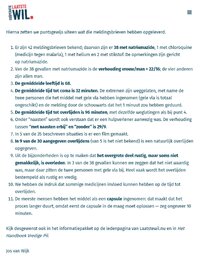
In September 2017, the CLW (a Dutch advocacy group for the right to a self-chosen end of life) announced that a legal lethal chemical substance had been found to enable a self-directed end of life. At the time, it was released to the world as Agent X, and later the name became known: sodium azide.

CLW asked relatives and other witnesses to send so-called reporting letters, in which the details of the use and the death were written down, so that they could inform everyone properly. Honesty requires saying that no reports have come in to them in recent years.

Here is a point-by-point summary of what the reporting letters revealed:

1. There are 42 known reporting letters; of these, 38 involve sodium azide, 1 with chloroquine (a malaria medication), 1 with helium, and 2 with nitrogen. The comments focus on sodium azide.

2. Of the 38 cases with sodium azide, the female/male ratio is 22/16; the other four are all male.

3. The average age is 68.

4. The average time to coma is 32 minutes. The extremes have been omitted, particularly the two people who ingested the substance with yellow custard (yellow custard is completely unsuitable) and the report by the coroner that it would have taken 1 minute.

5. The average time to death is 96 minutes, with the same omissions as in point 4.

6. "Relatives" also includes the presence of a caregiver. The ratio between "with relatives present" and "without" is 29/9.

7. In 5 of the 35 described situations, a film was made.

8. In 9 of the 30 indicated deaths (it is unknown for 5), a natural death was reported.

9. From the particulars, it can be inferred that the vast majority died peacefully, but sometimes not easily. In 3 of the 38 cases, we can say that it was not dignified, but that includes the two people with yellow custard. Very often, the death is described as calm and peaceful.

10. We have the impression that some medications can influence the time to death.

11. Most people ingested the substance as a capsule: this makes the process take longer, because the capsule first has to dissolve in the stomach — say about 10 minutes.


Source:
https://laatstewil.nu/middel-x-geschikt-of-niet/


Screenshot:
Laatstewil
 
  • Informative
  • Like
Reactions: blackorchid and Forveleth
a4001

a4001

Waste of Skin
Oct 26, 2025
47
Is extracting it from airbags a viable route? I doubt the purity would be all that high but maybe it's possible to just antiemetic your way through that and increase the dose accounting for some filler.
 
  • Like
Reactions: blackorchid
mayachcos

mayachcos

Member
Feb 18, 2026
16
Anyone has any info on whether the OTC alternatives to the new guide work well enough? my SA is otw soon and prescriptions are very difficult to get for me.
 
  • Like
Reactions: blackorchid
T

Talvikki

Elementalist
Nov 18, 2021
874
Sodium Azide: No Secondary Threat to First Responders

Suicide Powders

The Dutch Poisons Information Centre (NVIC) has noted that emergency services are often concerned about their own safety following reports of the ingestion of a 'suicide powder' (also known as 'Substance X'). This may involve various compounds. In the case of sodium azide ingestion, the gas hydrazoic acid is formed in the stomach. In this situation, however, insufficient gas is released via exhaled breath to cause serious health effects in first responders. If it is clear that powder has been ingested in a suicide attempt, first responders can enter the residence without risk.

Suicide powders (sodium azide, sodium nitrite)
The use of 'suicide powders' has been regularly featured in the news since 2017, during which speculations have also been voiced about the risk to bystanders and first responders. The exact chemical substance of the so-called 'Substance X' was initially not officially disclosed. Following speculations about this, both online and in the media, the NVIC has seen an increase in the number of attempted suicides since 2017, primarily involving sodium nitrite and sodium azide. In the meantime, it has been disclosed on the internet that 'Substance X' refers to sodium azide. It is important to realize that ingestion of other compounds in suicide attempts remains possible. After ingestion of sodium azide, the gas hydrazoic acid is formed in the stomach. This does not occur with the ingestion of sodium nitrite, and therefore there is no exposure risk for the first responder. This section focuses specifically on sodium azide.

Sodium azide
In 2017, attention in the media and public debate regarding 'suicide powders' led to an increase in intoxications involving, among others, sodium azide.

In the period from September 2017 up to and including 2023, the NVIC was consulted about 50 intoxications with this substance. The occurrence of secondary toxicity was not reported in any of these cases: neither during hospital treatment nor during transport. Two of these patients were treated at UMC Utrecht, and no special precautionary measures were taken other than a medical face mask and eye protection during intubation as part of the COVID-19 protocol. Health effects did not occur.

Unrest about suicide powder
The NVIC has noted that first responders, including police, fire brigade and ambulance services, are very concerned about their own safety following reports of the ingestion of a so-called 'suicide powder', also known as 'Substance X'. This concerns chemical substances that people ingest in an attempt to end their lives. The concerns relate to both direct contact with the patient and entering the residence.

It is important to realize that the ingestion of a 'suicide powder' may involve different compounds. In the period 2017 up to and including 2023, the NVIC mainly received reports concerning the use of sodium azide or sodium nitrite. In the case of sodium nitrite, an antidote is available, namely methylene blue. Individuals who receive this quickly have a greater chance of survival. Delay in treatment due to fear can therefore have serious consequences in this case.

In the home environment, any residual powder in open sachets or tubes poses no danger to first responders. In case of direct skin contact with the powder or with the patient's vomit, it is important to wash this off with water and mild soap. Although dry powder will not be absorbed quickly through the skin, this can happen after prolonged contact (hours) and if it becomes moist due to sweating, or with damaged skin. It is unlikely that the powder will become spontaneously airborne in large quantities, limiting the chance of inhalation.

However, after ingestion of sodium azide, the gas hydrazoic acid is formed by contact with stomach contents. Small amounts of this gas can be released via belching and may be present in the patient's exhaled breath. This will not, however, cause a dangerous concentration in the room, which can be entered without respiratory protection. After ingestion of sodium nitrite, no gas is formed in the stomach.

It is important to distinguish between the ingestion of sodium azide by an individual and an industrial accident involving this substance. In the event of an industrial accident, larger quantities of sodium azide may potentially be released, and more dispersion can occur, especially in the event of fire or explosion. At high concentrations of sodium azide (in powder form) in the air, there may be a real risk for first responders. Protocols for the fire brigade, who must enter an incident site, are based on such large-scale accidents.

Experience from reports to the NVIC
From 2006 up to and including 2023, the NVIC was consulted by the ambulance service regarding a total of approximately 1550 exposed patients: approximately 250 cases involved skin contact and approximately 1300 cases involved intentional ingestion (number of times vomiting unclear). This concerned exposures to household products, pesticides, disinfectants, DIY products and industrial substances.

In this period, the NVIC received 38 reports where there were concerns about the safety of ambulance healthcare professionals during transport or treatment of a patient with external chemical contamination or a patient who had ingested a chemical product.
In only 2 of these 38 cases were symptoms reported that were possibly (partly) related to secondary exposure:

− In one case, an ambulance healthcare professional felt 'unwell' after a patient had vomited following the ingestion of various chemical products, including chlorine bleach, methylated spirits and anti-flea product. This could also have been caused by the odour of the vomit.

− In another case, the symptoms could possibly be partly attributed to inhalation of solvent vapour from a pesticide: headache (often also mentioned as a result of stench), neck pain (unrelated), chest pain, throat pain.

In two incidents, symptoms were reported by first responders where it was not entirely clear whether these resulted from exposure at the location or (also) from (transport of) a chemically contaminated patient. In one case, ambulance healthcare professionals reported eye irritation at an incident where a patient was presumably exposed to pepper spray. In the other case, first responders on site (presumably also ambulance healthcare professionals) reported respiratory tract irritation as a result of exposure to chlorine bleach.

In the remaining 34 reports where concern was expressed about secondary exposure, no health complaints were reported. This relatively often involved the patient's ingestion of sodium azide (10x). Additionally, there were concerns following ingestion of potassium cyanide, lamp oil, formalin, toluene, (super)warfarin rat poison or an organophosphate insecticide. In one case, there was possible external contamination with a pesticide. Three times it involved exposure of victims to gases as a result of industrial accidents.

The NVIC is regularly consulted about these substances. In the period 2017 up to and including 2023, a total of 50 reports were made regarding the ingestion of sodium azide. In none of these cases was the occurrence of health effects reported as a result of secondary exposure of first responders: neither during hospital treatment nor during transport.

The Dutch Poisons Information Centre (NVIC)
https://nvic.umcutrecht.nl/nl/downloads

Ambulance protocol:
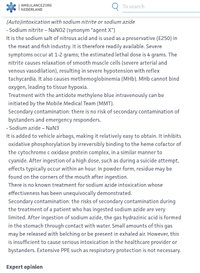
AmbulanceSNSA
 
  • Informative
Reactions: Forveleth
F

Forveleth

I knew I forgot to do something when I was 15...
Mar 26, 2024
4,085
Sodium Azide: No Secondary Threat to First Responders

Suicide Powders

The Dutch Poisons Information Centre (NVIC) has noted that emergency services are often concerned about their own safety following reports of the ingestion of a 'suicide powder' (also known as 'Substance X'). This may involve various compounds. In the case of sodium azide ingestion, the gas hydrazoic acid is formed in the stomach. In this situation, however, insufficient gas is released via exhaled breath to cause serious health effects in first responders. If it is clear that powder has been ingested in a suicide attempt, first responders can enter the residence without risk.

Suicide powders (sodium azide, sodium nitrite)
The use of 'suicide powders' has been regularly featured in the news since 2017, during which speculations have also been voiced about the risk to bystanders and first responders. The exact chemical substance of the so-called 'Substance X' was initially not officially disclosed. Following speculations about this, both online and in the media, the NVIC has seen an increase in the number of attempted suicides since 2017, primarily involving sodium nitrite and sodium azide. In the meantime, it has been disclosed on the internet that 'Substance X' refers to sodium azide. It is important to realize that ingestion of other compounds in suicide attempts remains possible. After ingestion of sodium azide, the gas hydrazoic acid is formed in the stomach. This does not occur with the ingestion of sodium nitrite, and therefore there is no exposure risk for the first responder. This section focuses specifically on sodium azide.

Sodium azide
In 2017, attention in the media and public debate regarding 'suicide powders' led to an increase in intoxications involving, among others, sodium azide.

In the period from September 2017 up to and including 2023, the NVIC was consulted about 50 intoxications with this substance. The occurrence of secondary toxicity was not reported in any of these cases: neither during hospital treatment nor during transport. Two of these patients were treated at UMC Utrecht, and no special precautionary measures were taken other than a medical face mask and eye protection during intubation as part of the COVID-19 protocol. Health effects did not occur.

Unrest about suicide powder
The NVIC has noted that first responders, including police, fire brigade and ambulance services, are very concerned about their own safety following reports of the ingestion of a so-called 'suicide powder', also known as 'Substance X'. This concerns chemical substances that people ingest in an attempt to end their lives. The concerns relate to both direct contact with the patient and entering the residence.

It is important to realize that the ingestion of a 'suicide powder' may involve different compounds. In the period 2017 up to and including 2023, the NVIC mainly received reports concerning the use of sodium azide or sodium nitrite. In the case of sodium nitrite, an antidote is available, namely methylene blue. Individuals who receive this quickly have a greater chance of survival. Delay in treatment due to fear can therefore have serious consequences in this case.

In the home environment, any residual powder in open sachets or tubes poses no danger to first responders. In case of direct skin contact with the powder or with the patient's vomit, it is important to wash this off with water and mild soap. Although dry powder will not be absorbed quickly through the skin, this can happen after prolonged contact (hours) and if it becomes moist due to sweating, or with damaged skin. It is unlikely that the powder will become spontaneously airborne in large quantities, limiting the chance of inhalation.

However, after ingestion of sodium azide, the gas hydrazoic acid is formed by contact with stomach contents. Small amounts of this gas can be released via belching and may be present in the patient's exhaled breath. This will not, however, cause a dangerous concentration in the room, which can be entered without respiratory protection. After ingestion of sodium nitrite, no gas is formed in the stomach.

It is important to distinguish between the ingestion of sodium azide by an individual and an industrial accident involving this substance. In the event of an industrial accident, larger quantities of sodium azide may potentially be released, and more dispersion can occur, especially in the event of fire or explosion. At high concentrations of sodium azide (in powder form) in the air, there may be a real risk for first responders. Protocols for the fire brigade, who must enter an incident site, are based on such large-scale accidents.

Experience from reports to the NVIC
From 2006 up to and including 2023, the NVIC was consulted by the ambulance service regarding a total of approximately 1550 exposed patients: approximately 250 cases involved skin contact and approximately 1300 cases involved intentional ingestion (number of times vomiting unclear). This concerned exposures to household products, pesticides, disinfectants, DIY products and industrial substances.

In this period, the NVIC received 38 reports where there were concerns about the safety of ambulance healthcare professionals during transport or treatment of a patient with external chemical contamination or a patient who had ingested a chemical product.
In only 2 of these 38 cases were symptoms reported that were possibly (partly) related to secondary exposure:

− In one case, an ambulance healthcare professional felt 'unwell' after a patient had vomited following the ingestion of various chemical products, including chlorine bleach, methylated spirits and anti-flea product. This could also have been caused by the odour of the vomit.

− In another case, the symptoms could possibly be partly attributed to inhalation of solvent vapour from a pesticide: headache (often also mentioned as a result of stench), neck pain (unrelated), chest pain, throat pain.

In two incidents, symptoms were reported by first responders where it was not entirely clear whether these resulted from exposure at the location or (also) from (transport of) a chemically contaminated patient. In one case, ambulance healthcare professionals reported eye irritation at an incident where a patient was presumably exposed to pepper spray. In the other case, first responders on site (presumably also ambulance healthcare professionals) reported respiratory tract irritation as a result of exposure to chlorine bleach.

In the remaining 34 reports where concern was expressed about secondary exposure, no health complaints were reported. This relatively often involved the patient's ingestion of sodium azide (10x). Additionally, there were concerns following ingestion of potassium cyanide, lamp oil, formalin, toluene, (super)warfarin rat poison or an organophosphate insecticide. In one case, there was possible external contamination with a pesticide. Three times it involved exposure of victims to gases as a result of industrial accidents.

The NVIC is regularly consulted about these substances. In the period 2017 up to and including 2023, a total of 50 reports were made regarding the ingestion of sodium azide. In none of these cases was the occurrence of health effects reported as a result of secondary exposure of first responders: neither during hospital treatment nor during transport.

The Dutch Poisons Information Centre (NVIC)
https://nvic.umcutrecht.nl/nl/downloads

Ambulance protocol:
View attachment 200273
Thank you thank you thank you for this update. I am considering this method and was going to leave a sign warning EMS qhwb they are called.
 
  • Hugs
Reactions: Talvikki

Similar threads

purebliss
Replies
43
Views
1K
Suicide Discussion
Daisy88_99
Daisy88_99
purebliss
Replies
7
Views
717
Suicide Discussion
purebliss
purebliss
Dante_
Replies
8
Views
1K
Suicide Discussion
Dante_
Dante_
F
Replies
71
Views
7K
Suicide Discussion
Alreadylate
Alreadylate