
• Hey Guest,

    We wanted to share a quick update with the community.

    Our public expense ledger is now live, allowing anyone to see how donations are used to support the ongoing operation of the site.

    👉 View the ledger here

    Over the past year, increased regulatory pressure in multiple regions like UK OFCOM and Australia's eSafety has led to higher operational costs, including infrastructure, security, and the need to work with more specialized service providers to keep the site online and stable.

    If you value the community and would like to help support its continued operation, donations are greatly appreciated. If you wish to donate via Bank Transfer or other options, please open a ticket.

    Donate via cryptocurrency:

    Bitcoin (BTC):
    Ethereum (ETH):
    Monero (XMR):
tinyfox

tinyfox

Member
Nov 26, 2025
82
Hi everyone. Have I thought of everything I need to make a successful CTB attempt using a full suspension?

1. I'm planning to do this on a door.
(Does it matter which side of the door the body should be hung on?)

2. At the bottom, I want to attach the rope to the dumbbell using a standard knot like an anchor hitch.

3. At the top, where the loop is, I'll use an Arbor knot.

4. The rope is 10 mm, made of synthetic material with a core.
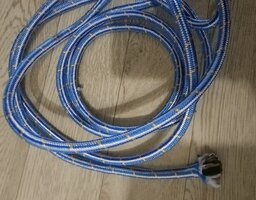
1000013036


5. I'll place the loop around my neck just above the Adam's apple, under the jawbone.

The loop will be at the back of my neck.

6. I'll test everything to make sure it holds my weight and withstands tugging.

7. I'll stand on a chair and take a step...

Please let me know—in short, are these generally all the main steps? Or did I miss something?

I'm also wondering if the door will close with a rope as stiff as mine. I can't check in advance since I'll only be at the location where the door is when I'm doing the CTB. Maybe I can make some with this. Press down hard so the core spreads out a little. Or should I not do that?
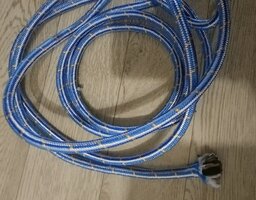
 

Attachments

  • 1000013036.jpg
    1000013036.jpg
    3.2 MB · Views: 0
  • Hugs
  • Like
Reactions: Praestat_Mori, eatantz and itsgone2
tinyfox

tinyfox

Member
Nov 26, 2025
82
😢
@JesiBel If it's not too much trouble, could you please check if there are any mistakes? Thanks in advance.
 
Last edited:
  • Hugs
Reactions: JesiBel
I

itsgone2

-
Sep 21, 2025
1,853
I wish I could help. I wonder if it's high enough is all. I'm too tall for a door unless it's psh
 
JesiBel

JesiBel

protoTYPE:cclxxv
Dec 5, 2024
1,142
Hi everyone. Have I thought of everything I need to make a successful CTB attempt using a full suspension?

1. I'm planning to do this on a door.
(Does it matter which side of the door the body should be hung on?)

2. At the bottom, I want to attach the rope to the dumbbell using a standard knot like an anchor hitch.

3. At the top, where the loop is, I'll use an Arbor knot.

4. The rope is 10 mm, made of synthetic material with a core.
View attachment 202874


5. I'll place the loop around my neck just above the Adam's apple, under the jawbone.

The loop will be at the back of my neck.

6. I'll test everything to make sure it holds my weight and withstands tugging.

7. I'll stand on a chair and take a step...

Please let me know—in short, are these generally all the main steps? Or did I miss something?

I'm also wondering if the door will close with a rope as stiff as mine. I can't check in advance since I'll only be at the location where the door is when I'm doing the CTB. Maybe I can make some with this. Press down hard so the core spreads out a little. Or should I not do that?
Hello! Before discussing the method, I hope you've carefully considered your decision and are 100% certain of your actions. It's wise not to rush into anything.

Regarding the questions...

The setup you described is this one, right?

Always test the setup. And check that the entire structure/materials are strong and in good condition.

1) It will depend on what you have available to lock or latch the door.

(It is important that the door also has a frame since it is its structural support) On one side you'll have the hinges, and on the other side is the lock or latch. Both will keep the door firmly in place.

If you have a latch on the door, you will have no option but to use that side.

If you have a lock (with keys), you can use either side of the door. I would use the outside of the door (where the frame protrudes, and stops the door when you close it); the hinges would be on the interior side.

It is important to secure the door in one of the two ways mentioned above (latch/lock), as this provides stability on both sides (right and left) of the door and prevents overloading only the hinges with all the weight.

2) The Anchor Hitch knot is a good option. You can tie a stopper knot (overhand knot) at the free end of the rope to make it even more secure.

3) The Arbor knot for the ligature is a perfect choice, as it tightens itself when a load/weight is added.

4) The rope is fine in terms of thickness and material (synthetic). The internal core fibers and their protective jacket make this type of rope the strongest, so I highly doubt it could break.
You might find a little harder to close the door because the rope has an internal core, it's stiffer and more difficult to flatten.

For this reason, for this type of setup, ropes without an internal core (hollow/single braid) are preferable. Because they are more flexible and malleable.

5) The ligature (rope) position is correct, under the jaw, more or less at the level of the hyoid bone. Ligature knot (Arbor knot) behind the neck in the center

6) Perfect, all setups should always be tested.

7) At this point you can pre-adjust the ligature around the neck, ensuring it is in contact with the skin without leaving any gaps, so that it will begin to compress more quickly when the body is suspended.

This thread also contains information about the method; it might be helpful to read it.

▪︎ Mistakes in the Hanging method
▪︎ Main points where the attempt may fail

Don't rush and think your decision through carefully.
 
  • Like
Reactions: Cepheuss, Praestat_Mori, eatantz and 1 other person
tinyfox

tinyfox

Member
Nov 26, 2025
82
Hello! Before discussing the method, I hope you've carefully considered your decision and are 100% certain of your actions. It's wise not to rush into anything.

Regarding the questions...

The setup you described is this one, right?

Always test the setup. And check that the entire structure/materials are strong and in good condition.

1) It will depend on what you have available to lock or latch the door.

(It is important that the door also has a frame since it is its structural support) On one side you'll have the hinges, and on the other side is the lock or latch. Both will keep the door firmly in place.

If you have a latch on the door, you will have no option but to use that side.

If you have a lock (with keys), you can use either side of the door. I would use the outside of the door (where the frame protrudes, and stops the door when you close it); the hinges would be on the interior side.

It is important to secure the door in one of the two ways mentioned above (latch/lock), as this provides stability on both sides (right and left) of the door and prevents overloading only the hinges with all the weight.

2) The Anchor Hitch knot is a good option. You can tie a stopper knot (overhand knot) at the free end of the rope to make it even more secure.

3) The Arbor knot for the ligature is a perfect choice, as it tightens itself when a load/weight is added.

4) The rope is fine in terms of thickness and material (synthetic). The internal core fibers and their protective jacket make this type of rope the strongest, so I highly doubt it could break.
You might find a little harder to close the door because the rope has an internal core, it's stiffer and more difficult to flatten.

For this reason, for this type of setup, ropes without an internal core (hollow/single braid) are preferable. Because they are more flexible and malleable.

5) The ligature (rope) position is correct, under the jaw, more or less at the level of the hyoid bone. Ligature knot (Arbor knot) behind the neck in the center

6) Perfect, all setups should always be tested.

7) At this point you can pre-adjust the ligature around the neck, ensuring it is in contact with the skin without leaving any gaps, so that it will begin to compress more quickly when the body is suspended.

This thread also contains information about the method; it might be helpful to read it.

▪︎ Mistakes in the Hanging method
▪︎ Main points where the attempt may fail

Don't rush and think your decision through carefully.
Thank you🙏
 
  • Hugs
Reactions: JesiBel
tinyfox

tinyfox

Member
Nov 26, 2025
82
@JesiBel
What is the minimum breaking strength of a rope in kilonewtons or kilograms?

Thank you

After researching online, I understand that ideally I should buy a rope with a breaking strength of 20 kN or 2000 kg MBL (Minimum Breaking Load)

WLL (Working Load Limit), or do I need to check this value? What should it be?


I also found a way to use the FSH knot not on a door, but by securing the knot to a metal rod at the top and simply hanging it with the back against the wall. Would an anchor knot work for this as well?
 
Last edited:
JesiBel

JesiBel

protoTYPE:cclxxv
Dec 5, 2024
1,142
@JesiBel
What is the minimum breaking strength of a rope in kilonewtons or kilograms?

Thank you

After researching online, I understand that ideally I should buy a rope with a breaking strength of 20 kN or 2000 kg MBL (Minimum Breaking Load)

WLL (Working Load Limit), or do I need to check this value? What should it be?


I also found a way to use the FSH knot not on a door, but by securing the knot to a metal rod at the top and simply hanging it with the back against the wall. Would an anchor knot work for this as well?
Sorry, it's impossible to know unless you know the brand of the rope you own and can look up that information on their website. If you have the label/packaging, all the information is frequently there.

Those specifications are provided by the rope manufacturer and will depend on the quality of its materials, thickness and construction.

About the Tensile/Breaking Strength and Working Load Limit WLL/ Safe Working Load SWL were discussed in that thread I mentioned earlier.

Minimum Breaking Strength (MBS), Tensile/Breaking Strength [Value tested and calculated in the manufacturer's laboratories by stretching and tensioning the rope until it breaks]

Article:
▪︎ Tensile Strength: Tensile strength is the maximum stress a material can withstand while being stretched before failing. It is a key indicator of a material's ability to resist breaking under tension.

▪︎ Breaking Strength: Breaking strength, or ultimate strength, refers to the maximum force a material can withstand before it breaks. Unlike tensile strength, a stress value, breaking strength is an absolute force value.

Source
Note: They are often used as synonyms in many sites.


The value you should consider is the WLL. And this will depend on your weight; your weight must not exceed the WLL (usually specified in kilograms).

The WLL is calculated (by the manufacturer) using a Safety Factor (between 5 and 10 usually). This includes a safety margin for everyday use and work, for example tying knots, lifting loads, dynamic forces, exposure to the environment/UV rays/humidity, shock loads etc.

For example...

Let's assume our rope has a Breaking Strength of 1500 kg.

▪︎ With a 5:1 safety factor, the working load limit WLL is= 300 kg (for safe use, you should not exceed this weight)

▪︎ With a 10:1 safety factor, the working load limit WLL is= 150 kg (for safe use, you should not exceed this weight)

What does all this depend on? On how we're going to use the rope. Without meaning to sound insensitive, we'll only use the rope once. For example, a firefighter or rescuer will make sure to have a rope with the greatest possible safety margin so as not to put their life or the lives of others at risk.. (talking about daily use at work).

You can set aside a brand-new length of rope (for the attempt), and use another section/length for testing or practicing knots.

A metal rod (if it is strong and securely mounted or screwed to the wall) could work. Remember to test all the anchor points you are considering. You can use the Anchor Hitch knot if the bar is horizontal.
 
  • Like
Reactions: tinyfox
tinyfox

tinyfox

Member
Nov 26, 2025
82
Sorry, it's impossible to know unless you know the brand of the rope you own and can look up that information on their website. If you have the label/packaging, all the information is frequently there....
@JesiBel
Thank you very much. 🙏
Last question,
I've found a spot where I can set up an FSH. But if I tie the rope there, it ends up rubbing against the corner of a concrete wall in one place. I was wondering if this is a major issue, and whether the rope rubbing against the corner might cause it to fray or even snap? Would it be worth putting something soft there, or am I worrying for nothing and a good rope won't be damaged by this?
Example shown in the figure
1000013103
 
  • Hugs
Reactions: JesiBel
S

SighCry

Member
May 15, 2026
56
Sorry to highjack this thread, but I don't think the dumbbell over door method is legitimate. For one, there is no way a rope less than 4 mm would fit over the top of a closed door, and I thought the rope should be at least 8mm+?

Is this an example of a rope without an internal core? : https://www.bunnings.com.au/grunt-3mm-x-15m-para-cord_p4310741

Thank you for reading!
Hello! Before discussing the method, I hope you've carefully considered your decision and are 100% certain of your actions. It's wise not to rush into anything.

Regarding the questions...

The setup you described is this one, right?

Always test the setup. And check that the entire structure/materials are strong and in good condition.

1) It will depend on what you have available to lock or latch the door.

(It is important that the door also has a frame since it is its structural support) On one side you'll have the hinges, and on the other side is the lock or latch. Both will keep the door firmly in place.

If you have a latch on the door, you will have no option but to use that side.

If you have a lock (with keys), you can use either side of the door. I would use the outside of the door (where the frame protrudes, and stops the door when you close it); the hinges would be on the interior side.

It is important to secure the door in one of the two ways mentioned above (latch/lock), as this provides stability on both sides (right and left) of the door and prevents overloading only the hinges with all the weight.

2) The Anchor Hitch knot is a good option. You can tie a stopper knot (overhand knot) at the free end of the rope to make it even more secure.

3) The Arbor knot for the ligature is a perfect choice, as it tightens itself when a load/weight is added.

4) The rope is fine in terms of thickness and material (synthetic). The internal core fibers and their protective jacket make this type of rope the strongest, so I highly doubt it could break.
You might find a little harder to close the door because the rope has an internal core, it's stiffer and more difficult to flatten.

For this reason, for this type of setup, ropes without an internal core (hollow/single braid) are preferable. Because they are more flexible and malleable.

5) The ligature (rope) position is correct, under the jaw, more or less at the level of the hyoid bone. Ligature knot (Arbor knot) behind the neck in the center

6) Perfect, all setups should always be tested.

7) At this point you can pre-adjust the ligature around the neck, ensuring it is in contact with the skin without leaving any gaps, so that it will begin to compress more quickly when the body is suspended.

This thread also contains information about the method; it might be helpful to read it.

▪︎ Mistakes in the Hanging method
▪︎ Main points where the attempt may fail

Don't rush and think your decision through carefully.
 
JesiBel

JesiBel

protoTYPE:cclxxv
Dec 5, 2024
1,142
@JesiBel
Thank you very much. 🙏
Last question,
I've found a spot where I can set up an FSH. But if I tie the rope there, it ends up rubbing against the corner of a concrete wall in one place. I was wondering if this is a major issue, and whether the rope rubbing against the corner might cause it to fray or even snap? Would it be worth putting something soft there, or am I worrying for nothing and a good rope won't be damaged by this?
Example shown in the figure
View attachment 203092
Perhaps you could place a towel or something soft over the edge of the concrete wall, or perhaps use electrical tape/insulating tape (they stick well to the rope) to wrap the section of rope that will be in contact with the edge.
I think it would be very difficult (almost impossible) for it to get cut just from being in contact with the edge. But it's good not to leave anything to chance.

(I think the photo you added didn't upload. The tool for upload or attach photos isn't working for me either.)

Sorry to highjack this thread, but I don't think the dumbbell over door method is legitimate. For one, there is no way a rope less than 4 mm would fit over the top of a closed door, and I thought the rope should be at least 8mm+?

Is this an example of a rope without an internal core? : https://www.bunnings.com.au/grunt-3mm-x-15m-para-cord_p4310741

Thank you for reading!
Hello! Well, you have the photos I took as an example. All houses and doors are different. Just because it doesn't work for you doesn't mean everyone will have the same problem. My rope is 12 mm and I can close the door perfectly; I just need to give it a little push and then lock it.

3 mm is too thin... (More info here)

Reviews from people who have bought that rope say it has an internal core (filament core). There's even a photo.

Reference (photo), rope construction
 
  • Like
Reactions: tinyfox
S

SighCry

Member
May 15, 2026
56
Perhaps you could place a towel or something soft over the edge of the concrete wall, or perhaps use electrical tape/insulating tape (they stick well to the rope) to wrap the section of rope that will be in contact with the edge.
I think it would be very difficult (almost impossible) for it to get cut just from being in contact with the edge. But it's good not to leave anything to chance.

(I think the photo you added didn't upload. The tool for upload or attach photos isn't working for me either.)


Hello! Well, you have the photos I took as an example. All houses and doors are different. Just because it doesn't work for you doesn't mean everyone will have the same problem. My rope is 12 mm and I can close the door perfectly; I just need to give it a little push and then lock it.

3 mm is too thin... (More info here)

Reviews from people who have bought that rope say it has an internal core (filament core). There's even a photo.

Reference (photo), rope construction
Thank you for taking the time to respond! Guess it just doesn't work for me.
 
tinyfox

tinyfox

Member
Nov 26, 2025
82
Perhaps you could place a towel or something soft over the edge of the concrete wall, or perhaps use electrical tape/insulating tape (they stick well to the rope) to wrap the section of rope that will be in contact with the edge.
I think it would be very difficult (almost impossible) for it to get cut just from being in contact with the edge. But it's good not to leave anything to chance.
@JesiBel
Thank you very much. For some reason, the images aren't showing up. If I may ask a few more questions :)


If the rope's anchor point is a large object like a rock, a ladder, etc., can I use standard knots like the anchor hitch, or do I need to use different ones?


And the question I'm most curious about: If I somehow manage not to lose consciousness during the attempt, what will happen to me? Will the person die of suffocation within 5–10 minutes anyway, or will I just hang there?

Maybe better to have a knife nearby and cut the rope?
Or is it better to just hang there until the end?
Thanks
 
JesiBel

JesiBel

protoTYPE:cclxxv
Dec 5, 2024
1,142
@JesiBel
Thank you very much. For some reason, the images aren't showing up. If I may ask a few more questions :)


If the rope's anchor point is a large object like a rock, a ladder, etc., can I use standard knots like the anchor hitch, or do I need to use different ones?


And the question I'm most curious about: If I somehow manage not to lose consciousness during the attempt, what will happen to me? Will the person die of suffocation within 5–10 minutes anyway, or will I just hang there?

Maybe better to have a knife nearby and cut the rope?
Or is it better to just hang there until the end?
Thanks
Yes, the forum's image upload function probably has a bug.

If it's a large object, you'll need a lot of rope. The Anchor Hitch knot is a good knot; you can use it at many anchor points such as: bars or railings, ceiling beams, staircases with open risers (in a horizontal position, or diagonally and vertically but with stops that intersect together).

The Anchor Hitch knot is not a good option if you use a vertical bar with a slippery surface that has no stopper because it will slip when you apply your weight and the force is a downward pull.
The knot is designed to handle tension for a pulling perpendicular force and not for a parallel (downward) force/pull (along the length of the bar for example, the knot can lose its grip and slip)

Remember to practice tying the knot correctly and securely, and tighten it well so it's not loose. At the free end of the rope, tie a stopper knot (overhand knot) for even more security, leaving a 15-20 cm end of free rope behind that knot.

To lose consciousness quickly, the positioning of the ligature and type of knot around the neck are crucial. This information is in the posts above; it's recommended to reread everything (before an attempt)

/By the way, having the information doesn't mean you should do it. This is an informational forum and shouldn't influence your decisions. You need to be 100% sure of your actions and have no doubts./

In case something goes wrong... for example, the ligature knot shifts out of position (always pre-adjust the ligature beforehand and avoid sudden movements such as jumping out of a chair). You will undoubtedly die, but it will take longer, since the flow of oxygenated blood to the brain is not completely cut off.. if the knot were to shift to one side of the neck and one of the carotid arteries were left uncompressed (remember that the area where the knot of the ligature rests is where it exerts the least pressure)

This is an example video (and discussion in that thread) of an attempt that took too long.

I'm not sure if you'll have the strength to cut the rope once you're suspended in the air; as a precaution, you might want to have a sharp object with you. Perhaps the least risky thing would be not to kick the chair or stool away, leave it there so you can stand on it again. You can slide your legs to the sides to be suspended in the air.

No, I would never recommend that you stay suffering and waiting for death. If you feel that something isn't right, you should abort the attempt. Never get rid of your support point (chair or stool).
 
  • Like
Reactions: tinyfox
tinyfox

tinyfox

Member
Nov 26, 2025
82
Yes, the forum's image upload function probably has a bug.

If it's a large object, you'll need a lot of rope. The Anchor Hitch knot is a good knot; you can use it at many anchor points such as: bars or railings, ceiling beams, staircases with open risers (in a horizontal position, or diagonally and vertically but with stops that intersect together).

The Anchor Hitch knot is not a good option if you use a vertical bar with a slippery surface that has no stopper because it will slip when you apply your weight and the force is a downward pull.
The knot is designed to handle tension for a pulling perpendicular force and not for a parallel (downward) force/pull (along the length of the bar for example, the knot can lose its grip and slip)

Remember to practice tying the knot correctly and securely, and tighten it well so it's not loose. At the free end of the rope, tie a stopper knot (overhand knot) for even more security, leaving a 15-20 cm end of free rope behind that knot.

To lose consciousness quickly, the positioning of the ligature and type of knot around the neck are crucial. This information is in the posts above; it's recommended to reread everything (before an attempt)

/By the way, having the information doesn't mean you should do it. This is an informational forum and shouldn't influence your decisions. You need to be 100% sure of your actions and have no doubts./

In case something goes wrong... for example, the ligature knot shifts out of position (always pre-adjust the ligature beforehand and avoid sudden movements such as jumping out of a chair). You will undoubtedly die, but it will take longer, since the flow of oxygenated blood to the brain is not completely cut off.. if the knot were to shift to one side of the neck and one of the carotid arteries were left uncompressed (remember that the area where the knot of the ligature rests is where it exerts the least pressure)

This is an example video (and discussion in that thread) of an attempt that took too long.

I'm not sure if you'll have the strength to cut the rope once you're suspended in the air; as a precaution, you might want to have a sharp object with you. Perhaps the least risky thing would be not to kick the chair or stool away, leave it there so you can stand on it again. You can slide your legs to the sides to be suspended in the air.

No, I would never recommend that you stay suffering and waiting for death. If you feel that something isn't right, you should abort the attempt. Never get rid of your support point (chair or stool).
Thank you very much. And really last
For example, if the top knot of the rope comes undone and the person falls with the noose still tight around their neck, will this halt the process of death, or will the tight rope continue to constrict the carotid arteries, ultimately causing the person to die?
The Anchor Hitch knot is not a good option if you use a vertical bar with a slippery surface that has no stopper because it will slip when you apply your weight and the force is a downward pull.
The knot is designed to handle tension for a pulling perpendicular force and not for a parallel (downward) force/pull (along the length of the bar for example, the knot can lose its grip and slip)
Sorry, can you have a images of bad options for this knot? I'm not understanding all information without A visual example
I'm not sure if you'll have the strength to cut the rope once you're suspended in the air; as a precaution, you might want to have a sharp object with you. Perhaps the least risky thing would be not to kick the chair or stool away, leave it there so you can stand on it again. You can slide your legs to the sides to be suspended in the air.

No, I would never recommend that you stay suffering and waiting for death. If you feel that something isn't right, you should abort the attempt. Never get rid of your support point (chair or stool).
Won't that interfere with my self-preservation instinct? I'm sure I'll want to hop back onto the stool during the attempt.

Or, if I do everything right, I won't really have time to get back on the chair?
 
Last edited:
JesiBel

JesiBel

protoTYPE:cclxxv
Dec 5, 2024
1,142
Thank you very much. And really last
For example, if the top knot of the rope comes undone and the person falls with the noose still tight around their neck, will this halt the process of death, or will the tight rope continue to constrict the carotid arteries, ultimately causing the person to die?

Sorry, can you have a images of bad options for this knot? I'm not understanding all information without A visual example

Won't that interfere with my self-preservation instinct? I'm sure I'll want to hop back onto the stool during the attempt.

Or, if I do everything right, I won't really have time to get back on the chair?
Always make sure to tie the knots securely; that's why it's good to practice and test the setup.

Regarding the question, the Arbor Knot will stop compressing if the load (body) is no longer suspended adding weight. If you fall to the ground because the knot has come undone from the anchor point, it will stop compressing your neck. Unless the knot jams, causing it to continue exerting compression (unlikely to happen).

Interrupted attempts are very risky, since the longer the brain is without oxygen, the greater the damage, and you could be left with lasting effects. So always make sure you have enough time available, are alone with no one around, and have a tested and safe setup.

Use the Anchor Hitch knot for anchor points in a horizontal position. The rope will be tightened perpendicularly to the anchor point, forming a "T'. (photo 1, photo 2, photo 3, photo 4)

Also you can use "Y" or "+ (cross-shaped)" intersections.

/Try tying the knot in different places and you'll find it easier to understand./

The Anchor Hitch knot is not a good option if you plan to tie it to a vertical post/pole/bar with a smooth surface, as it could slide down when you add your weight (since the structure has no intersection to "stop" the knot). Photo 1, Photo 2

/I can't upload photos because the forum is still having the same bug. I've attached some photos I found on the web as examples (check the hyperlinks)/

For vertical anchor points where the force is applied parallel is recommended the: Icicle Hitch knot. (Always test, as heavier weights may require appropriate adjustments to generate more friction in the knot)

Icicle Hitch knot video 1, Icicle Hitch knot video 2

Article:
The Icicle Hitch Knot is used when force is applied parallel to a post or pole.

The Icicle Hitch Knot grips a smooth surface so well that it even works on a tapered surface such as a marlinespike - hence its name.

For added security, you can add an extra wrap or a half hitch on the standing line (section of the rope that is not being manipulated to tie the knot)

For heavy or critical loads, ensure extra wraps and test the grip to prevent slippage, especially on very slick surfaces.

Can bind tightly under heavy loads, making untying difficult.


Source: 1, 2, 3


You shouldn't force yourself to make an attempt. Please, think everything through carefully before making a decision.
I believe the survival instinct is a good indicator that it's not the right time yet.

Never get rid of your support where you can stand on it again (the video in my previous post of the woman trying to get back to the ladder is a good and sad example of this)

Don't gamble with the possibilities either; some people lose consciousness very quickly (less than 5 seconds) and don't have enough time to do anything else to "save themselves". Before you lose consciousness you lose muscle strength, don't forget that.
 
tinyfox

tinyfox

Member
Nov 26, 2025
82
Always make sure to tie the knots securely; that's why it's good to practice and test the setup.

Regarding the question, the Arbor Knot will stop compressing if the load (body) is no longer suspended adding weight. If you fall to the ground because the knot has come undone from the anchor point, it will stop compressing your neck. Unless the knot jams, causing it to continue exerting compression (unlikely to happen).

Interrupted attempts are very risky, since the longer the brain is without oxygen, the greater the damage, and you could be left with lasting effects. So always make sure you have enough time available, are alone with no one around, and have a tested and safe setup.

Use the Anchor Hitch knot for anchor points in a horizontal position. The rope will be tightened perpendicularly to the anchor point, forming a "T'. (photo 1, photo 2, photo 3, photo 4)

Also you can use "Y" or "+ (cross-shaped)" intersections.

/Try tying the knot in different places and you'll find it easier to understand./

The Anchor Hitch knot is not a good option if you plan to tie it to a vertical post/pole/bar with a smooth surface, as it could slide down when you add your weight (since the structure has no intersection to "stop" the knot). Photo 1, Photo 2

/I can't upload photos because the forum is still having the same bug. I've attached some photos I found on the web as examples (check the hyperlinks)/

For vertical anchor points where the force is applied parallel is recommended the: Icicle Hitch knot. (Always test, as heavier weights may require appropriate adjustments to generate more friction in the knot)

Icicle Hitch knot video 1, Icicle Hitch knot video 2

Article:
The Icicle Hitch Knot is used when force is applied parallel to a post or pole.

The Icicle Hitch Knot grips a smooth surface so well that it even works on a tapered surface such as a marlinespike - hence its name.

For added security, you can add an extra wrap or a half hitch on the standing line (section of the rope that is not being manipulated to tie the knot)

For heavy or critical loads, ensure extra wraps and test the grip to prevent slippage, especially on very slick surfaces.

Can bind tightly under heavy loads, making untying difficult.


Source: 1, 2, 3


You shouldn't force yourself to make an attempt. Please, think everything through carefully before making a decision.
I believe the survival instinct is a good indicator that it's not the right time yet.

Never get rid of your support where you can stand on it again (the video in my previous post of the woman trying to get back to the ladder is a good and sad example of this)

Don't gamble with the possibilities either; some people lose consciousness very quickly (less than 5 seconds) and don't have enough time to do anything else to "save themselves". Before you lose consciousness you lose muscle strength, don't forget that.
Thanks again so much for your answers; you've really helped me out. Yes, I actually don't really want to force myself to do this, and I have a self-preservation instinct that's holding me back, but life brings so much suffering that I have to resort to methods like this, and unfortunately, the situation in my life is only going to get worse over time... The situation is such that it's almost impossible to endure the suffering anymore.
Although I'm still hoping for the best and hanging in there, things are more likely to get worse

If I may, I have a couple more questions. Sorry for asking so much.

I understand about the icicle knot; I'll use it on smooth vertical surfaces. But I'm a little confused about the Anchor hitch—can it be used in situations like the one in my illustration? When the rope hooks onto something like a metal ladder rung or a pin, then runs horizontally, and after the corner of the wall drops down vertically, where an Arbor knot is already tied? Which knots are best to use in that case? Some pictures for example. What kind of knots need for such cases like on pictures?


Second question. And if, for example, the attempt is made with your back to the wall, where should you place the chair for support? A little to the side, and then you have to take a step to the side to hang. If the chair is too close, you might want to stop the attempt; if it's too far, you might not be able to climb back up if you want to stop for some reason.

Thanks again @JesiBel
---
Untitled2 20260616132512
Untitled2 20260616133025
Untitled4 20260616133615 Untitled5 20260616135509
 
Cepheuss

Cepheuss

Student
Apr 17, 2023
188
Hi hopefully im writing this in time, i tried the door method the issue was when i dropped instead of my hands going to my neck like normal i ended up pulling myself up on the door frame and moving the rope so i could stand on the chair. SI is a bitch and i dont know a way around this - you could potentially handcuff yourself?
 
  • Like
Reactions: tinyfox
JesiBel

JesiBel

protoTYPE:cclxxv
Dec 5, 2024
1,142
Thanks again so much for your answers; you've really helped me out. Yes, I actually don't really want to force myself to do this, and I have a self-preservation instinct that's holding me back, but life brings so much suffering that I have to resort to methods like this, and unfortunately, the situation in my life is only going to get worse over time... The situation is such that it's almost impossible to endure the suffering anymore.
Although I'm still hoping for the best and hanging in there, things are more likely to get worse

If I may, I have a couple more questions. Sorry for asking so much.

I understand about the icicle knot; I'll use it on smooth vertical surfaces. But I'm a little confused about the Anchor hitch—can it be used in situations like the one in my illustration? When the rope hooks onto something like a metal ladder rung or a pin, then runs horizontally, and after the corner of the wall drops down vertically, where an Arbor knot is already tied? Which knots are best to use in that case? Some pictures for example. What kind of knots need for such cases like on pictures?


Second question. And if, for example, the attempt is made with your back to the wall, where should you place the chair for support? A little to the side, and then you have to take a step to the side to hang. If the chair is too close, you might want to stop the attempt; if it's too far, you might not be able to climb back up if you want to stop for some reason.

Thanks again @JesiBel
---
View attachment 203297
View attachment 203298
View attachment 203299View attachment 203300
I'm so sorry you're going through this situation, I completely understand you. A decision like this should be a last resort. As you mentioned, if you still have hope for a better life change, it's best to wait. Sometimes we cannot see beyond our problems and they drown us in an abyss that seems to have no way out.
I don't want to be intrusive nor invalidate your emotions or experiences, but if this is a situation that can be improved (it may not be easy but it can lead to a good outcome), perhaps it would be advisable to take a break in this thread or subforum.

I promise not to bother you with these words again. Just be careful with your actions; a mind burdened with darkness is not a good advisor.

/Off-topic: I apologize for the inconvenience, the problem with the photos I think was mine, I reinstalled the browser and now I can see them. It's strange; it had never happened to me before./

Now I can see what you meant, thanks for all the drawings (and patience). The Anchor Hitch knot is suitable for those anchor points. Tighten the knot well at each step; make sure it doesn't come loose.
Remember to add a stopper knot (overhand knot or double overhand knot) to the free end of the rope to make it even more secure (as I mentioned earlier), plus leaving a 15-20 cm end of free rope behind that knot.

Hidden content
You need -1 more posts to view this content

Always test to find the most suitable anchor point; the strongest of them all.

As for where to put the chair... I'd place it right underneath me. I wouldn't place it at the sides, front, or back; an accidental leg movement could push it further away, making it unreachable.

Hidden content
You need -1 more posts to view this content
 
  • Like
Reactions: tinyfox
AreWeWinning

AreWeWinning

·
Nov 1, 2021
594
But I'm a little confused about the Anchor hitch—can it be used in situations like the one in my illustration?

Yes, you can use the Anchor Hitch. There is no need to overcomplicate this, and there aren't any tricks or hidden nuances here. The Anchor Hitch is suitable to tie a rope to an object, period. It doesn't matter whether it's a ladder, a metal bar, or something else, or whether the rope drops down a vertical wall or hangs in the air.

The Anchor Hitch is not suitable to tie the rope to a vertical pole with a smooth surface, because the hitch will slide down if you pull the rope downward. But this is true for most other knots as well, and it's pretty obvious if you think about it. There is nothing special about the Anchor Hitch in this regard.

I highly doubt that you'll use a smooth vertical pole for your attempt, in which case you'd need an Icicle Hitch or some other friction hitch. But in the rare chance, yes, a "friction hitch" is the type of knot you need.

Never get rid of your support where you can stand on it again (the video in my previous post of the woman trying to get back to the ladder is a good and sad example of this)
Second question. And if, for example, the attempt is made with your back to the wall, where should you place the chair for support? A little to the side, and then you have to take a step to the side to hang. If the chair is too close, you might want to stop the attempt; if it's too far, you might not be able to climb back up if you want to stop for some reason.

I have a different opinion on this. On my attempt, I'll make damn sure to kick my stool over.

It's worth knowing that if your stool is within reach, there is a chance that you'll try to step back on it. Whether you'll be able to or not is a different question, and cannot be reliably predicted.

In many videos of recorded hangings, people do try to free themselves in the last moments. There are also reported accounts of people here who grabbed onto things and pulled themselves up. This is how SI works. It's often impossible to suppress it, even if someone is certain in their decision.

Whether you should kick your stool over or keep it around depends on what's most important to you. If you kick your stool over and you have nothing around to grab onto, it's pretty much guaranteed that you'll die, provided your rope or anchor point doesn't break. If you keep the stool around, it increases the chance of failure.

People often choose to tie their hands together behind their back for the same reason. They do it because they know that, in the last moments, SI can kick in whether they want it or not.

Regarding the case of the woman in the video, who regained consciousness because of the mistakes she made, I'm not seeing a tragic outcome. I see a successful attempt. Sure, she did make mistakes – like using a fixed loop instead of a noose, or positioning the knot incorrectly – so her setup wasn't ideal. Her death could have been quicker. Still, her death didn't take long, and we don't know what she felt during those couple of minutes.

She chose to kick the ladder away, because she made a decision: she wanted to be absolutely certain that she would die. It worked, and she got what she wanted. She's at peace now. Her decision to kick the ladder away is exactly what made her attempt successful (despite her mistakes with the knot). Had she not done that, her attempt would have failed. Perhaps this wasn't her first attempt, and that's why she did that?
 
Last edited:
  • Like
Reactions: tinyfox
JesiBel

JesiBel

protoTYPE:cclxxv
Dec 5, 2024
1,142
Hi hopefully im writing this in time, i tried the door method the issue was when i dropped instead of my hands going to my neck like normal i ended up pulling myself up on the door frame and moving the rope so i could stand on the chair. SI is a bitch and i dont know a way around this - you could potentially handcuff yourself?
Hello!

Honestly, I'm not a fan of forced* or impulsive attempts. If your SI is incredibly strong, perhaps you should listen to it.

* restraining your hands, setting deadlines..

I think the only way you could handcuff your hands is after pre-adjusting the ligature around the neck, but I don't recommend it.

There is no need to rush or put pressure on yourself.

Many of the videos of successful attempts show people who display no fear or emotions at the moment of the final decision. I think it must be something like a mental point of no return.. where there is nothing left to do.
 
  • Like
Reactions: tinyfox and Cepheuss
Cepheuss

Cepheuss

Student
Apr 17, 2023
188
Hello!

Honestly, I'm not a fan of forced* or impulsive attempts. If your SI is incredibly strong, perhaps you should listen to it.

* restraining your hands, setting deadlines..

I think the only way you could handcuff your hands is after pre-adjusting the ligature around the neck, but I don't recommend it.

There is no need to rush or put pressure on yourself.

Many of the videos of successful attempts show people who display no fear or emotions at the moment of the final decision. I think it must be something like a mental point of no return.. where there is nothing left to do.
hi sorry the reply is weird sasu is so buggy for me at the minute. I completely agree i wasnt scared before hand at all it was just once i was hanging that i got that wave of si which ive seen in a fair view videos i dont think theres a way around it. Ive made my peace with dying im not scared of it anymore and im prepared it just felt like i didnt have control over my body
 
  • Like
Reactions: tinyfox
tinyfox

tinyfox

Member
Nov 26, 2025
82
Hello!

Honestly, I'm not a fan of forced* or impulsive attempts. If your SI is incredibly strong, perhaps you should listen to it.

* restraining your hands, setting deadlines..

I think the only way you could handcuff your hands is after pre-adjusting the ligature around the neck, but I don't recommend it.

There is no need to rush or put pressure on yourself.

Many of the videos of successful attempts show people who display no fear or emotions at the moment of the final decision. I think it must be something like a mental point of no return.. where there is nothing left to do.
In reality, there's no hope, and there's no way to fix the situation. At least I haven't been able to over the past 5 years, and now it's only getting worse—it's physically impossible to put up with this. Thanks anyway for your kind words 🙏


I have another question :)

I've noticed that the anchor hitch is usually tied onto rings, carabiners, or thin rods.

I forgot to mention that my attachment point is a slightly different type—would this knot work if my attachment point is something like a square or rectangular metal beam, a rectangular metal step, or just a square metal pipe?

I understand that a bowline knot definitely won't work, but could an anchor hitch be used here? Thanks—here are some examples in the photos
1000013139

1000013140


Yes, you can use the Anchor Hitch. There is no need to overcomplicate this, and there aren't any tricks or hidden nuances here. The Anchor Hitch is suitable to tie a rope to an object, period. It doesn't matter whether it's a ladder, a metal bar, or something else, or whether the rope drops down a vertical wall or hangs in the air.

The Anchor Hitch is not suitable to tie the rope to a vertical pole with a smooth surface, because the hitch will slide down if you pull the rope downward. But this is true for most other knots as well, and it's pretty obvious if you think about it. There is nothing special about the Anchor Hitch in this regard.

I highly doubt that you'll use a smooth vertical pole for your attempt, in which case you'd need an Icicle Hitch or some other friction hitch. But in the rare chance, yes, a "friction hitch" is the type of knot you need.


Yes, you're right—I won't use a smooth pipe.

The only thing that concerns me is whether the anchor hitch will work if I attach it to a wide mounting point, like the square beams shown in these photos.

And regarding the possibility of escaping, I agree with you too—when you do this, you want to know that there's no turning back...
 

Attachments

  • 1000013140.png
    1000013140.png
    422.2 KB · Views: 0

Similar threads

peacecomingsoon
Replies
3
Views
233
Suicide Discussion
Captive_Mind515
Captive_Mind515
L
Replies
17
Views
915
Suicide Discussion
Aren
A
E
Replies
2
Views
232
Suicide Discussion
erpelwatcher
E
L
Replies
14
Views
926
Suicide Discussion
caramelpudding
caramelpudding
S
Replies
13
Views
829
Suicide Discussion
WhyMe123
WhyMe123