• Hey Guest,

    We wanted to share a quick update with the community.

    Our public expense ledger is now live, allowing anyone to see how donations are used to support the ongoing operation of the site.

    👉 View the ledger here

    Over the past year, increased regulatory pressure in multiple regions like UK OFCOM and Australia's eSafety has led to higher operational costs, including infrastructure, security, and the need to work with more specialized service providers to keep the site online and stable.

    If you value the community and would like to help support its continued operation, donations are greatly appreciated. If you wish to donate via Bank Transfer or other options, please open a ticket.

    Donate via cryptocurrency:

    Bitcoin (BTC):
    Ethereum (ETH):
    Monero (XMR):
D

devils~advocate

Specialist
Feb 29, 2024
314
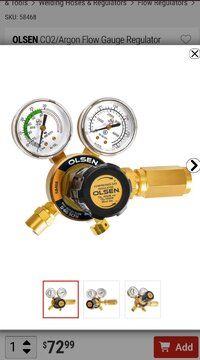
Can this regulator work for nitrogen?

Yes, I know that it's meant for Argon and carbon dioxide, but both my funds and access are limited. This is what I -can- access. So, can it be used? Ive read that this kind of regulator will measure at a 70% accuracy for nitrogen. Is this true?

I've got all the other things I need for my situation figured out.

Fingers crossed for a timely and detailed response.

Ty. 🩷
Do you have a photo the regulator and system setup? I think the general consensus is that regulators can be used interchangeably with different gases. There are correction factors. The 70% sounds correct. (70-84%)
 
PainWorseThanDeath

PainWorseThanDeath

I wish it could have been any other way.
Apr 29, 2026
87
Do you have a photo the regulator and system setup? I think the general consensus is that regulators can be used interchangeably with different gases. There are correction factors. The 70% sounds correct. (70-84%)


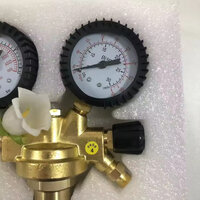
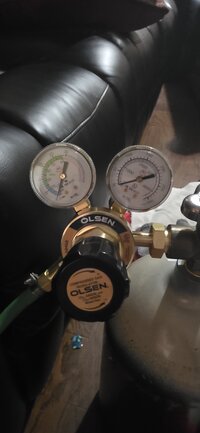
Here is the regulator. I do not have the rest of the setup together yet, but I'll be going for overkill, quite literally, by using a 40cf food grade nitrogen cylinder from a local supplier.

Ive got the exit bag already figured out, using the megathread. Instructions are quite easy to comprehend.

I guess my only remaining questions are, is this a usable regulator, if so, what = 20lpm on it, what size tubing fits it, and if ill need clamps to make tubing stay attached.

I need to make sure I get this correct. The last thing I need is a botched brewing experience leaving me even worse off than I already am. I need to guarantee my success.


1000031343
 
  • Like
Reactions: Out_Of_My_Head
D

devils~advocate

Specialist
Feb 29, 2024
314
When using nitrogen gas in an regulator calibrated for argon, the correction factor is approximately 0.70 to 0.72
Because nitrogen is less dense than argon, a flowmeter designed for argon will overstate the actual amount of nitrogen flowing through it. To find your true flow rate, you must multiply the reading on your argon gauge by this factor.

Actual Nitrogen Flow = Argon Gauge Reading x 0.70
Example: If argon regulator displays 22 LPM, the actual nitrogen flow is roughly 15 LPM (22x0.70)
 
  • Like
Reactions: PainWorseThanDeath
S

sm1the

Student
Sep 18, 2022
142
I tested my ELSA EEBD N2 yesterday.
I did a leak test for valve/regulator connection, regulator outlet, brass hose joiner(dual barbed) joining the EEBD and extension hose.
However ,I didn't test the EEBD to EEBD hose factory connection point,should I?.

The noise was a bit loud inside the shed but I think it MAY be camouflaged by outdoor daytime noises(?).
I also have a sound blanket hung in a rough kind of manner inside.

I put an O2 monitor in the hood,o2 dropped to 0% in under 30 seconds but did climb right back up to 17% in seconds,the beck was open.
I will do another test with a styrofoam dummy head, though I'm
uncertain whether the O% environment is supposed to remain for a certain time after shutting gas to ascertain success.
I also don't know how to test EEBD exhaust valve ?.
 
PainWorseThanDeath

PainWorseThanDeath

I wish it could have been any other way.
Apr 29, 2026
87
When using nitrogen gas in an regulator calibrated for argon, the correction factor is approximately 0.70 to 0.72
Because nitrogen is less dense than argon, a flowmeter designed for argon will overstate the actual amount of nitrogen flowing through it. To find your true flow rate, you must multiply the reading on your argon gauge by this factor.

Actual Nitrogen Flow = Argon Gauge Reading x 0.70
Example: If argon regulator displays 22 LPM, the actual nitrogen flow is roughly 15 LPM (22x0.70)
Would 20lpm be too much? I want to make damn sure the CO2 clears the bag.
I tested my ELSA EEBD N2 yesterday.
I did a leak test for valve/regulator connection, regulator outlet, brass hose joiner(dual barbed) joining the EEBD and extension hose.
However ,I didn't test the EEBD to EEBD hose factory connection point,should I?.

The noise was a bit loud inside the shed but I think it MAY be camouflaged by outdoor daytime noises(?).
I also have a sound blanket hung in a rough kind of manner inside.

I put an O2 monitor in the hood,o2 dropped to 0% in under 30 seconds but did climb right back up to 17% in seconds,the beck was open.
I will do another test with a styrofoam dummy head, though I'm
uncertain whether the O% environment is supposed to remain for a certain time after shutting gas to ascertain success.
I also don't know how to test EEBD exhaust valve ?.
I want to go for an eebd setup, but it just seems too complicated to put together.... yet it also seems like the most surefire way to pass directly out, too...which is the entire point.

Has anyone here tested ctb like this, and is still around to talk abt it? What does it feel like?

I dont even want to feel it coming on, if possible.

Id like to take one breath and pass out, like I used to getting a lung full of nitrous.
 
Last edited:
S

sm1the

Student
Sep 18, 2022
142
No, nothing physically wrong with me
Do u know where the posts regarding -
'Testing hood with o2 analyzer(meter) and ascertaining how long low O2 environment remains in hood AFTER shutting off gas' posts are by any chance?
I know there a at least a couple of posts regarding this I read but I can't find them anymore.
 
PainWorseThanDeath

PainWorseThanDeath

I wish it could have been any other way.
Apr 29, 2026
87
Does the hose need to be a certain diameter?
 
O

outrider567

Visionary
Apr 5, 2022
2,986
Would 20lpm be too much? I want to make damn sure the CO2 clears the bag.

I want to go for an eebd setup, but it just seems too complicated to put together.... yet it also seems like the most surefire way to pass directly out, too...which is the entire point.

Has anyone here tested ctb like this, and is still around to talk abt it? What does it feel like?

I dont even want to feel it coming on, if possible.

Id like to take one breath and pass out, like I used to getting a lung full of nitrous.
Yes, I've tested the EEBD on myself many times(which is dangerous), but there's no such thing as 'one breath and you're out', even at 25 lpm--Using the finger oximeter, which has a 5 second delayed reaction, I took 5 or 6 deep breaths, after first allowing the EEBD hood to fill up with Nitrogen--At first, the oximeter doesn't show much of a drop(but your pulse rate will increase almost right away), and I'm thinking, is this Nitrogen really working?, but then it quickly dropped to 77, and I ripped off the Hood quickly, the oximeter then bottomed out at 40... I don't think you pass out til it hits 25--no physical effects seen at 40
Do u know where the posts regarding -
'Testing hood with o2 analyzer(meter) and ascertaining how long low O2 environment remains in hood AFTER shutting off gas' posts are by any chance?
I know there a at least a couple of posts regarding this I read but I can't find them anymore.
Just hit the search icon at the top right, looks like a magnifying glass--Then Put in 'O2 Analyzer'
 
Last edited:
S

sm1the

Student
Sep 18, 2022
142
I g
Yes, I've tested the EEBD on myself many times(which is dangerous), but there's no such thing as 'one breath and you're out', even at 25 lpm--Using the finger oximeter, which has a 5 second delayed reaction, I took 5 or 6 deep breaths, after first allowing the EEBD hood to fill up with Nitrogen--At first, the oximeter doesn't show much of a drop(but your pulse rate will increase almost right away), and I'm thinking, is this Nitrogen really working?, but then it quickly dropped to 77, and I ripped off the Hood quickly, the oximeter then bottomed out at 40... I don't think you pass out til it hits 25--no physical effects seen at 40

Just hit the search icon at the top right, looks like a magnifying glass--Then Put in 'O2 Analyzer'
I was thinking of using a Nonin onyx 9590 to do this but I'm not sure.
BTW, this is the only accessible accurate SPO2 meter available I believe.
Used by professionals everywhere.
Works accurately on even dark skin.(most don't)
 
  • Informative
Reactions: outrider567
O

outrider567

Visionary
Apr 5, 2022
2,986
I g

I was thinking of using a Nonin onyx 9590 to do this but I'm not sure.
BTW, this is the only accessible accurate SPO2 meter available I believe.
Used by professionals everywhere.
Works accurately on even dark skin.(most don't)
Looks like they're about $200
 
PainWorseThanDeath

PainWorseThanDeath

I wish it could have been any other way.
Apr 29, 2026
87
Would using an eebd hood be quicker? What would the differences be, in yalls opinion, between an exit bag and eebd setup?

I fully comprehend the exit bag setup... im picking up 40cf of nitrogen Monday, along w the regulator, and tubing...

I'm just wondering if an eebd is better/more reliable, and what the difference is in setting one up vs making an exit bag.
 
D

DeathSweetDeath

Paragon
Nov 12, 2025
922
Would 20lpm be too much? I want to make damn sure the CO2 clears the bag.

I want to go for an eebd setup, but it just seems too complicated to put together.... yet it also seems like the most surefire way to pass directly out, too...which is the entire point.

Has anyone here tested ctb like this, and is still around to talk abt it? What does it feel like?

I dont even want to feel it coming on, if possible.

Id like to take one breath and pass out, like I used to getting a lung full of nitrous.
I've been told in an exit bag, it's two breaths. But after all steps followed; scrunching air out of bag, then letting it fill while you hyperventilate, then pull the bag down. And 15-20 should be fine, make sure you do the conversion to calculate.
 
  • Like
Reactions: PainWorseThanDeath
S

sm1the

Student
Sep 18, 2022
142
Looks like they're about $200
Yes around that depending on place of purchase.
Even State ambulance services,military use this from what I read because of the accuracy.
Most SPO2 you can get are highly unreliable especially with different skin tones.
Of course there are even better ones in hospitals I bet,but cost $1000's


ELSA EEBD test.
I tested the Elsa EEBD by donning on styrofoam dummy with partial shoulders.
I leak tested regulator/cylinder valve,regulator outlet,dual barb extended hose first with Snoop.
I chose Snoop because apparently its more non-toxic than others and rated for most systems(Ai told me this so not sure!).

Initially I placed an CY-12c O2 analyzer inside the hood,turned on gas at 25lpm.
It was taking a long time for O2 to drop.
I realised this was due to the external probe on analyser creating an opening at the neck (?).
I replaced the CY-12C with another analyser - Toptes guard-756.
Turned on gas at 25lpm.
It dropped to 0.6% at 2min30sec.
I stopped gas at 0.6% because I realised the hood was already probably at 0 but the meter only drops at a certain speed(?).
It dropped to 0% second later(without gas flow).

So could I have achieved 0% O2 much sooner?.

With no gas flow to hood-

  • 3mins 0%
  • 11mins 0.3%
  • 13 mins 0.5%
  • 15 min 0.6%
I stopped test at 15 mins(0.6% O2) ,I figured this result is good.
If you dont agree please let me know?
If there is something I missed pls let me know.

I keep thinking I missed things.
I want to test the exhaust valve but I dont know how.

 
Last edited:
K

k1w1

Specialist
Feb 16, 2022
362
Would using an eebd hood be quicker? What would the differences be, in yalls opinion, between an exit bag and eebd setup?

I fully comprehend the exit bag setup... im picking up 40cf of nitrogen Monday, along w the regulator, and tubing...

I'm just wondering if an eebd is better/more reliable, and what the difference is in setting one up vs making an exit bag.
Setting one up is a breeze, if you can change a tap washer or put air in your tyres then....you can do this.
Getting a decent ELSA that INFLATES is the challenge. The ones with a hard orinasal inner mask do not seal, the outer is, as has been mentined here, rather porous.
Maybe I was unlucky, maybe I should have purchased a better quality hood.
My request to you guys is if you find a quality item made of silicone....DM me please.
 
Intoxicated

Intoxicated

MIA Man
Nov 16, 2023
1,246
When using nitrogen gas in an regulator calibrated for argon, the correction factor is approximately 0.70 to 0.72
Because nitrogen is less dense than argon, a flowmeter designed for argon will overstate the actual amount of nitrogen flowing through it. To find your true flow rate, you must multiply the reading on your argon gauge by this factor.

Actual Nitrogen Flow = Argon Gauge Reading x 0.70
Example: If argon regulator displays 22 LPM, the actual nitrogen flow is roughly 15 LPM (22x0.70)
Are you sure? Suppose we want to measure COâ‚‚ flow rate with an argon flow meter. What conversion factor should we use?

 
D

devils~advocate

Specialist
Feb 29, 2024
314
Well typically this is what I have found on websites. Sometime the numbers are a little different.
Common Argon Regulator Correction Factors
If using a flowmeter calibrated for Argon, multiply the scale reading by these factors for the gas you are actually using:
  • Argon (Ar): 1.0 (No change)
  • Carbon Dioxide (CO2): approx 0.81 – 0.85
  • Helium (He): approx 2.69
  • Nitrogen (N2) approx 0.65-0.70
 
Intoxicated

Intoxicated

MIA Man
Nov 16, 2023
1,246
Well typically this is what I have found on websites. Sometime the numbers are a little different.
Common Argon Regulator Correction Factors
If using a flowmeter calibrated for Argon, multiply the scale reading by these factors for the gas you are actually using:
  • Argon (Ar): 1.0 (No change)
  • Carbon Dioxide (CO2): approx 0.81 – 0.85
  • Helium (He): approx 2.69
  • Nitrogen (N2) approx 0.65-0.70
What websites? How do these factors correlate to gas density? He < Nâ‚‚ < Ar < COâ‚‚
 
D

devils~advocate

Specialist
Feb 29, 2024
314
Google/AI can give specific answer. But there many discussions on correction factors. Yes it is based on density.
 
Intoxicated

Intoxicated

MIA Man
Nov 16, 2023
1,246
But there many discussions on correction factors. Yes it is based on density.
According to the info provided in that thread, the correct math should be:

actual nitrogen flow = argon gauge reading * √(1.38 / 0.97),

where 1.38 is the specific gravity of argon relative to air, and 0.97 is the specific gravity of nitrogen relative to air; that is,

actual nitrogen flow = argon gauge reading * 1.19

So 15 lpm flow of Nâ‚‚ would be indicated as nearly 12.6 lpm on an argon flow meter.
 
Last edited:
PainWorseThanDeath

PainWorseThanDeath

I wish it could have been any other way.
Apr 29, 2026
87
According to the info provided in that thread, the correct math should be:

actual nitrogen flow = argon gauge reading * √(1.38 / 0.97),

where 1.38 is the specific gravity of argon relative to air, and 0.97 is the specific gravity of nitrogen relative to air; that is,

actual nitrogen flow = argon gauge reading * 1.19

So 15 lpm flow of Nâ‚‚ would be indicated as nearly 12.6 lpm on an argon flow
How can that be right when nitrogen is less dense than argon?
I'm thinking it's better to be over on gas flow than under, isn't it?
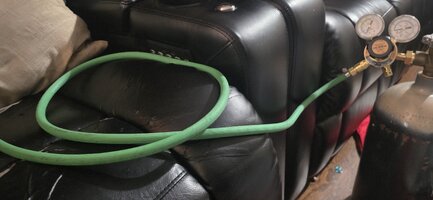
Also.... hows this look?


1000031494
Is this hose good, or too thick?


1000031493
 
Last edited:
Intoxicated

Intoxicated

MIA Man
Nov 16, 2023
1,246
How can that be right when nitrogen is less dense than argon?
A higher density of a gas/fluid implies a higher drag force if other conditions are equal.
Since nitrogen has a significantly lower density than argon, it will create a smaller drag force when moving through an obstacle than argon would do as long as other conditions for both gases are nearly the same. A smaller gas velocity implies a smaller drag force too, so any decrease in the drag force inside a flow meter can be interpreted by the device as decrease in flow rate.
I'm thinking it's better to be over on gas flow than under, isn't it?
Depends on how much gas you have and whether a higher flow rate can produce inconveniences.
Also.... hows this look?
I can't read the units due to low image quality. If the outer scale on the left gauge is L/min, then this device should be suitable.
 
Last edited:
  • Like
Reactions: sm1the
PainWorseThanDeath

PainWorseThanDeath

I wish it could have been any other way.
Apr 29, 2026
87
A higher density of a gas/fluid implies a higher drag force if other conditions are equal.
Since nitrogen has a lower density than argon, it will create a lower drag force when moving through an obstacle than argon as long as other conditions for both gases are the same. A smaller gas velocity also implies a lower drag force, so any decrease in the drag force inside a flow meter can be interpreted by the device as decrease in flow rate.

Depends on how much gas you have and whether a higher flow rate can produce inconveniences.

I can't read the units due to low image quality. If the outer scale on the left gauge is L/min, then this device should be suitable.
Yes, it absolutely is lpm. That's why I selected it. I have 40 cf, which is twice the recommended amount. I just want to make damn sure the CO2 clears the bag, and no oxygen gets in. I don't want to pass out from the nitrogen, but then start suffocating and suffering because the CO2 isn't clearing. That is also why I am concerned concern about the size of the tube. I don't want oxygen getting in either.
 
PainWorseThanDeath

PainWorseThanDeath

I wish it could have been any other way.
Apr 29, 2026
87
Y'all want to know whats -really- stupid? I now have everything I need, but cord locks! Lol

I secured the entire kit in one day, except the cord lock! 😆

How tf can this shithole town have everything besides cord locks?

Everything else has been a breeze.

I never thought a CORD LOCK would be the hold up... it should be the easiest part! Lol


Ahhh well... im relieved that im almost there...

Im ready to go. Its odd... I thought I'd be scared, the closer I get, but you know something?

Im not. Im happy. Im happier than ive been since this whole inescapable nightmare began.

I may catch the bus earlier rhan expected. I've been thinking about it, and honestly... I'm excited to punch the fuck out. I've done my time being tortured on this planet for being trans. I'm done being the victim of sexual and physical violence. I hate that I'm leaving everybody behind, because I am very well loved... but that's not enough to offset the torture I face.

Lets hope I turn some cord locks up somewhere today or tomorrow.
 
S

sm1the

Student
Sep 18, 2022
142
Yes, I've tested the EEBD on myself many times(which is dangerous), but there's no such thing as 'one breath and you're out', even at 25 lpm--Using the finger oximeter, which has a 5 second delayed reaction, I took 5 or 6 deep breaths, after first allowing the EEBD hood to fill up with Nitrogen--At first, the oximeter doesn't show much of a drop(but your pulse rate will increase almost right away), and I'm thinking, is this Nitrogen really working?, but then it quickly dropped to 77, and I ripped off the Hood quickly, the oximeter then bottomed out at 40... I don't think you pass out til it hits 25--no physical effects seen at 40

Just hit the search icon at the top right, looks like a magnifying glass--Then Put in 'O2 Analyzer'
I tried that too but couldn't find them, I know there here somewhere.

A higher density of a gas/fluid implies a higher drag force if other conditions are equal.
Since nitrogen has a significantly lower density than argon, it will create a smaller drag force when moving through an obstacle than argon would do as long as other conditions for both gases are nearly the same. A smaller gas velocity implies a smaller drag force too, so any decrease in the drag force inside a flow meter can be interpreted by the device as decrease in flow rate.

Depends on how much gas you have and whether a higher flow rate can produce inconveniences.

I can't read the units due to low image quality. If the outer scale on the left gauge is L/min, then this device should be suitable.
Hey could u please have a look at this and tell me what u think -
Post in thread 'Exit bag and inert gas megathread'
 
Last edited:
D

devils~advocate

Specialist
Feb 29, 2024
314
Does the ELSA EEBD Hood have a type of SCBA LDV (lung demand valve) ?
Its the part that fits over the nose/mouth. From photos it looks like a SCBA LDV.
If it is one, that is a very efficient way of breathing.
 
PainWorseThanDeath

PainWorseThanDeath

I wish it could have been any other way.
Apr 29, 2026
87
I tried that too but couldn't find them, I know there here somewhere.

I used 6mm inner diameter hoses as -this will easily pass 25lpm,
Easily available,
Fits standard accessories like brass hose joiner(dual ended barb), regulator outlet barb etc.

Hey could u please have a look at this and tell me what u think -
Post in thread 'Exit bag and inert gas megathread'

Im not going to eebd route, ive decided on the turkey bag bc its easier for me to understand.
 
S

sm1the

Student
Sep 18, 2022
142
Does the ELSA EEBD Hood have a type of SCBA LDV (lung demand valve) ?
Its the part that fits over the nose/mouth. From photos it looks like a SCBA LDV.
If it is one, that is a very efficient way of breathing.
Mine doesn't but I think they have a hard material version (looks like SCBA HELMET)that may have one.(its not called SCBA,called EEBD) .
 
Last edited:
D

devils~advocate

Specialist
Feb 29, 2024
314
Mine doesn't but I think they have a hard material version (looks like SCBA HELMET)that may have one.(its not called SCBA,called EEBD) .
I guess the part that goes over the nose/mouth is more like a respirator.
From the photos that part looks like it is more than just a hose to a face/mouth covering.
So I assume these EEBD hood are a constant flow into the hood ?
 
S

sm1the

Student
Sep 18, 2022
142
Hoses/tubing

I searched extensively for a 6mm ID clear hose that was lightly reinforced,very flexible and very light weight.

The hose I got was 80g per 100m, this is pretty light for reinforced hoses.
6mm ID,10.2mm OD.
PVC food grade hose.

Why I wanted the above qualities-

Clear(actually translucent)-so I can see any insects,blockages etc possibly in the hose.(u never know).

Lightweight - less stress on hood. .

Reinforced - for kink and crush resistance.if If it kinks airflow is blocked.(non-reinforced flexible hoses will kink very easily)

Flexibility -more flexibility means less stress on hood connection etc.

I compared weights of different reinforced hoses and decided on this.

Clear hoses with textile or nylon braid is usually the lightest from what I could see.

These type of hoses are usually still too heavy for EB I think.

When I was considering EB I chose high flow star lumen type O2 tubing.Its kink resistant and may pass full 15lpm.

(regular O2 tubing I'm not Sure of).

Another medical tubing I bought was suction tubing.It usually has 6mm ID and ridges lengthwise for stren
 

Similar threads

S
Replies
0
Views
129
Suicide Discussion
sm1the
S
meowzers3276
Replies
2
Views
476
Suicide Discussion
cocobutter
C
DeoxygenDaydream
Replies
6
Views
576
Suicide Discussion
cocobutter
C